The Kid Who Ate Lunch on the Wall: Why I'm Building Kenektic
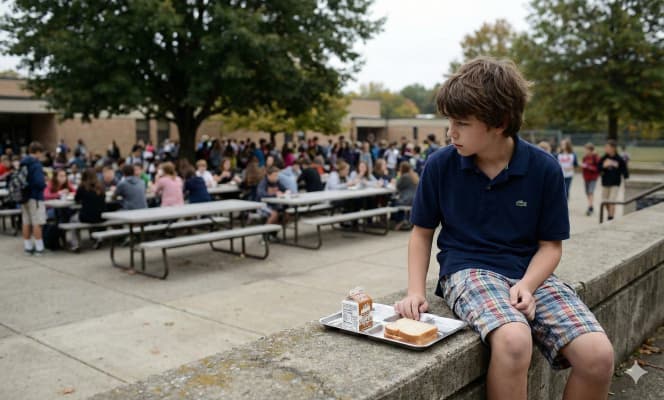
I spent seventh grade eating lunch on a wall.
Not metaphorically. Literally. Every day, I'd take my tray from the cafeteria line, scan the tables full of kids who seemed to effortlessly navigate the social landscape of junior high, and make my way to the wall at the edge of the lunchroom. I'd hop up, sit on the wall, and eat alone.
People noticed. Of course they noticed. But here's the thing about seventh grade: nobody's going to be the first one to reach out to the kid eating lunch alone. Nobody wants to risk their own fragile social standing by being seen with the wall kid.
I'm telling you this because I'm building Kenektic, an AI-powered platform designed to help people make real friends. And if I'm going to ask people to trust me with something as intimate as their loneliness, you deserve to know that I'm not building this from market research or trend analysis. I'm building it because I've lived this problem my entire life.
The Pattern Started Early
That wall wasn't just a seventh-grade moment. It was the beginning of a pattern that would follow me for decades.
I went to a small private school through sixth grade. When I transitioned to the local junior high—yes, junior high, back when it was seventh through ninth grade before they invented the gentler term "middle school"—I had to start over socially. And I had no idea how.
I wasn't bullied. I wasn't actively excluded. I was just... there. Present but invisible. Eating on that wall while hundreds of kids around me formed friendships that seemed to happen automatically, like some social magic I hadn't been taught.
High School: 2-3 Best Friends, No One Else
Things got better in high school. Sort of.
I found my people—two, maybe three best friends who really knew me. We were close. The kind of close where you could show up at each other's houses unannounced, where you had inside jokes nobody else understood, where you knew each other's families.
And when I was 15, I met Paula. She became my best friend, and eventually, the love of my life. We've been married 31 years now, and she has been there for every chapter of this story. I need you to understand that, because everything I'm about to tell you about loneliness exists alongside the fact that I found my person. Paula is my rock. But a spouse—even the best one—can't be your entire social world. That's not fair to them, and it doesn't fill the specific need for friendships outside your family.
But beyond Paula and those two or three friends? That was it. No wider social circle. No casual friends. No "let me introduce you to some people" moments that expanded my network. While other kids seemed to navigate multiple friend groups, I had my tiny bubble and nothing beyond it.
University of Oregon: Thousands of People, One Friend
When I enrolled at the University of Oregon, I thought everything would change. New city, new people, fresh start. Thousands of students. Endless opportunities to reinvent myself.
I made some friends in the freshman dorms. You know how it goes—you bond over late-night pizza, terrible dining hall food, the shared misery of 8 AM classes. But really, truly, deeply? I made one friend. One.
He lived in Portland, just 90 miles north of Eugene. He'd invite me to his house. We ended up moving in together. And even then, even living with someone I considered a real friend, I still struggled to expand beyond that one connection.
We'd go out to bars together. This was the era before smartphones, remember—no Instagram to scroll through, no texts to pretend to read when you're sitting alone. Just you and your thoughts and whatever was on TV above the bar.
He'd see people he knew. He'd drift over to say hi, get pulled into conversations, naturally integrate into groups. And I'd sit there on my barstool. Alone. Nursing a beer. Watching college life happen around me while I waited for my one friend to come back.
Do you know what that feels like? To be surrounded by hundreds of people having the time of their lives while you sit there invisible? To have exactly one person in a school of thousands who would notice if you didn't show up?
USC: Same Story, Different State
I thought maybe it was Eugene. Maybe it was the University of Oregon culture. Maybe if I went to study business at USC, where everyone was driven and there on purpose, things would be different.
So I enrolled at the University of Southern California.
The pattern mostly repeated itself. But I did make one real friend—someone I genuinely connected with. For a while, it felt like maybe USC had finally cracked the code for me. But just like every other friendship in my life, it didn't last. We lost touch not too long after. Same pattern, same result.
USC, where everyone supposedly bonds over shared suffering and late-night study sessions. Where your cohort becomes your network for life. Where lifelong friendships are forged.
For me? Same wall, different building.
The First Job: Something Finally Clicked (Sort Of)
Here's the weird part: when I got my first job out of USC, something shifted. Suddenly, I was making friends. Not tons of them, but more than I'd ever had before. Work gave me a structure, a shared purpose, built-in conversation topics. The professional environment somehow made connection easier than college ever did.
But—and this is important—I was still terrible at maintaining friendships.
Without smartphones to text each other, keeping in touch required actual effort. Phone calls. Making plans. Remembering to reach out. And I was bad at all of it. Really bad.
Friends from work would drift away once one of us changed jobs. College friends would fade once we weren't in the same city. Even close friendships would weaken over time because I just... couldn't maintain them.
My Wedding Day: A Stark Realization
When I got married, I looked around at my wedding and saw the truth of my entire adult life.
My two best friends from high school were there. My one close friend from USC was there. Three friends from work were there—people I genuinely cared about but haven't really seen or spoken to since. That was basically it.
No college friend group. No USC network. No wide circle of people who'd been part of my journey. Just a handful of people who'd managed to stay connected despite my inability to maintain friendships.
It wasn't the wedding I'd imagined when I was younger. It was honest, though. A true reflection of a lifetime of struggling to make friends and an even harder time keeping them.
(There are other reasons it was so hard for me to maintain friendships, but that's a story for another time.)
And then Paula and I had three amazing kids. Our house is full. It's loud and chaotic and I love it—our youngest is at UCSB, and the older two are still home. When my family is around, loneliness doesn't stand a chance. But here's the thing that took me a long time to understand: you can be deeply loved at home and still feel the absence of friendships. They fill different needs. Paula can't be my wife and my entire friend group. My kids can't be my children and my buddies. The loneliness I've carried my whole life was never about lacking love. It was about lacking friends.
Why I'm Telling You All This
I'm not sharing this for sympathy. I'm sharing it because if I'm going to build a platform to help people make friends, you need to understand that I'm not some socially effortless person who decided friendship-making would be a good business opportunity. And I'm not someone who lacked love—I had Paula, and eventually our kids. But friendship loneliness is its own kind of pain, and it's the one I know best.
I'm the kid who ate lunch on the wall.
I'm the college student who sat alone at bars, pre-smartphone, with nothing to do but wait for his one friend to come back.
I'm the guy who looked around his wedding and realized how small his world had become despite decades of trying.
I know what loneliness feels like from the inside. I know the specific pain of being surrounded by people and still feeling alone. I know the frustration of wanting connection but not knowing how to create it. I know the exhaustion of trying to maintain friendships when you don't seem to have whatever instinct makes that easy for other people.
This isn't market research for me. This is my life.
The Pattern I Finally Recognized
Looking back now, I can see the pattern clearly:
I was never good at that first step. The introduction. The "hey, want to hang out?" The casual expansion from acquaintance to friend. I could go deep with the few people I connected with, but I couldn't go wide.
I could make friends in structured environments—work, school—where there were built-in reasons to interact. But outside those structures? I was lost.
And once I made friends, I was terrible at the maintenance. The checking in, the making plans, the little gestures that keep friendships alive. In the pre-smartphone era, when that required actual phone calls and conscious effort, I failed more often than I succeeded.
Why This Makes Me the Right Person to Build This
Here's what I learned from decades of struggling with friendship:
The problem isn't that lonely people are broken or socially incompetent. Some of us are just wired differently. We need different approaches, different entry points, different kinds of support.
Structure helps. When there are reasons to interact, pathways to connection, facilitation rather than pure chance, friendship becomes possible for people like me.
Depth matters more than breadth. I never needed 50 friends. I needed two or three real ones. Quality over quantity isn't just a platitude—it's the difference between lonely and connected.
Maintenance is a skill, not an instinct. Some people naturally stay in touch. Others need systems, reminders, prompts. That's not a failure—it's just a different way of operating.
The right introduction changes everything. The few times in my life I've made real friends, it was because someone or something facilitated the connection in a way that worked for how I'm wired.
What I'm Building (And Why It Has to Work)
I'm building Kenektic because I wish it had existed for seventh-grade me, eating lunch on that wall.
I'm building it because I wish it had existed for college me, sitting alone on that barstool.
I'm building it because I wish it had existed for me at USC, watching everyone else form their lifetime networks.
I'm building it because it needs to exist for everyone who's lived any version of this story. And there are millions of us.
The Surgeon General says loneliness is affecting 150+ million Americans. That's not an abstract number to me. That's 150 million people who know exactly what that wall felt like. Who've sat alone in crowded rooms. Who've struggled with the same patterns I did.
I'm building Kenektic because loneliness isn't a personal failure. It's a solvable problem that requires better tools. And for the first time in history, we have the technology to build those tools.
What Comes Next
In my next post, I'll tell you about the specific moment that turned this from "I wish this existed" into "I have to build this." About a family member in a retirement community, surrounded by 200+ residents, knowing only a handful of them. About seeing my seventh-grade self reflected in an 80-year-old woman and realizing: this pattern never stops unless someone stops it.
But today, I wanted you to know the most important thing: I'm not building Kenektic from the outside looking in. I'm building it from the inside, looking for a way out—for me, and for everyone else who's ever felt this way.
If you're reading this and seeing yourself in any part of my story, you're exactly who I'm building this for.
And this time, I'm going to get it right.
Have you experienced something similar? Did you have a "wall moment" in your life—a time when loneliness felt most acute despite being surrounded by people? I'd genuinely love to hear your story.
Kenektic is in development and will launch soon. If you want to be notified when we're ready, or if you want to share your story with me directly, reach out at hello@kenektic.com.
Coming Next: "A Retirement Home Visit Changed Everything" - How personal experience became a mission to solve loneliness for millions of Americans.